
Groove Study: What Makes a Beat Funky?

Funk grooves have a particular effect on listeners. When a band really leans hard into a funky groove, the natural reaction is to contort your face as if sucking on a lemon. But what exactly about funk beats evokes such a reaction? Let’s explore some classic grooves to distill the elements that make these beats funky.
As we learned in the last blog post about the history of funk music, funk grooves are categorized by repetitive, syncopated rhythmic patterns with a greater emphasis on beat ‘1’ of each phrase. Funk music is driven by the bass line and drums, as opposed to melodies over a chord progression. Many, but not all, funk grooves are distinguished by three main traits: the use of ghost notes and multiple layers of dynamics, syncopated patterns on the bass drum, and displacing the backbeat on the snare drum.
Cold Sweat - James Brown

Clyde Stubblefield laid down one of the most influential beats of all time on James Brown’s tune “Cold Sweat,” released in 1967. The song rests on a 2-measure bass and drum groove. The beat includes many 16th ghost notes on the snare, creating depth using layers of dynamics. Aside from the kick on beat ‘1',’ the bass drum mostly resides on the ‘and’ of beats, creating syncopation. But the real funk magic happens on the snare drum. Instead of always hitting the snare drum on the backbeats (the ‘2’ and ‘4’ of each measure), Stubblefield displaces the backbeat on ‘4’ in the first measure behind by an 8th note. So he hits that snare on the ‘and’ of beat 4. Displacing the backbeat results in a floating effect, a brief moment where the beat seemingly flips. This rhythmic device set the standard for funk grooves into the 1970s and beyond.

Cissy Strut - The Meters

In 1969, The Meters released an iconic tune by the name of “Cissy Strut.” Capturing the band’s unique New Orleans sound, heavily influenced by second-line parade music, the tune’s drum groove feels kind of disjointed, but in an oddly satisfying way. Although the snare plays a typical backbeat (with the addition of another stroke on the ‘and’ of 4), the feel is broken up by the hi-hat pattern. Instead of playing a steady pattern, like constant 8th or 16th notes, drummer Joseph “Zigaboo” Modeliste uses 16th notes on the hihats to fill gaps in the rhythm between the kick and snare. Most of the kicks in the groove occur on 16th offbeats, or the ‘e’ and ‘a’ of beats. During the B section of the tune, Modeliste improvises around the general feel of the groove. Despite not possessing the same tight feel of the grooves played by James Brown’s band, the same use of syncopation and dynamics make Modeliste a pioneer of funk drumming.

Chameleon - Herbie Hancock

A few years later in 1973, Herbie Hancock released Head Hunters, featuring Harvey Mason on the drums. The opening track, “Chameleon,” possesses one of the most recognizable drum grooves ever recorded. Similar to “Cold Sweat,” this groove also features a displaced backbeat. But instead of displacing the snare behind to the ‘and’ of beat 4, Mason displaces the snare from beat 2 ahead by a 16th note to the ‘a’ of beat 1. Shifting the backbeat by just a single 16th note has a profound impact on the feel of the groove. It almost sounds as if the beat malfunctions for a brief moment. Also similar to the “Cold Sweat” groove, the kick only plays syncopated rhythms aside from the emphasis on beat 1 at the beginning of the phrase. Mason also accents each beat on the hihats and adds ghost notes throughout, giving the groove additional dimension and texture.

What is Hip? - Tower of Power
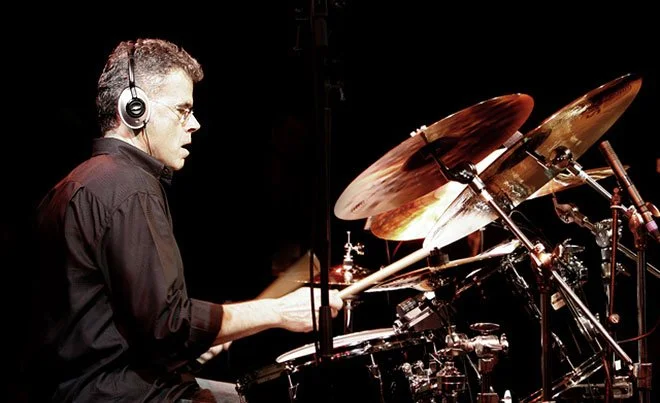
Tower of Power, backed by David Garibaldi, released a tune called “What Is Hip?” in 1973. Garibaldi took heavy influence from Modeliste’s drumming in the Meters, as well as rhythms and patterns used in lots of Latin and Afro-Cuban music. By layering repetitive, syncopated rhythms between the hihats, kick, and snare together, Garibaldi creates a dense groove full of intricacies, resulting in a feel unique to his playing. Unlike the grooves in “Cold Sweat” and “Chameleon,” which only use ghost notes to fill out gaps in the hihat pattern, Garibaldi places ghost notes that overlap with the hihat rhythm. The hands alone fill every 16th note in the measure, resulting in a churning, bubbling feel. The “swooshing” effect on the hihats is achieved by keeping steady 8th notes with the hihat foot while playing the pattern on top with a hand.

Each of the above grooves represent a particular flavor of funk. James Brown’s funk aligned more closely to soul and R&B music, the Meters created a looser style of funk unique to New Orleans, Hancock’s Head Hunters explored a fusion of funk and jazz music, and Tower of Power forged a style more influenced by big band jazz, which created a sound unique to Oakland, California. Aside from the stylistic nuances, all of the drummers named above make use of dynamics and ghost notes, syncopated rhythms on the bass drum, and displaced backbeats on the snare drum. Try using these concepts to create your own funk grooves to give listeners that sought after “sucking on a lemon” look.
All of our instructors here at Loudlands Music Lab draw from years of experience studying, playing, and performing on the drums in every capacity imaginable. Interested in starting your drumming journey or taking your skills to the next level? Schedule a trial drum lesson near Everett to get closer to your goals!